Since my last post, a lot has happened. I went to my college reunion, where I had the shocking realization that I'm one of those people who put on a significant amount of weight since college. I noticeably surprised at least a few former classmates, including one who pinched my abdomen and said, "What's going on here?" (I wasn't upset; he's a good enough friend that he gets to do that without incurring my wrath.) I walked around Oberlin in the muggy summer heat feeling like a big mound of fat. Many of my classmates seemed quite fit, and some looked younger than they had during college. I felt unappealing, regretful, and confused -- how had I let this happen to me?
Then I went to New York, where I began reading Frank Bruni's excellent memoir, Born Round. In it, the former New York Times food critic talks about his struggles with bulimia and compulsive overeating. I felt like I was reading my own story. In New York, I was walking a lot every day, much more than I do in Seattle; the same had been true in Oberlin. In both places, I had no other affordable transportation option. I huffed and puffed at times, but I survived. At the same time, I managed to eat more moderately than I had in many, many months.
The result: I lost weight. Even so, by the time I got to Virginia for an old friend's wedding, I once again felt fat and unattractive. It probably didn't help that Richmond was even muggier than Ohio and New York, and that the temperature was around 95 degrees. Also, weddings are a merciless indicator of how I'm feeling about my romantic prospects; in this case, I felt suddenly as though I'd be single forever unless I found a way to sustain my experiment in moderate eating. Being thin isn't the key to attracting a mate, but reining in self-destructive overeating would do wonders for my self-esteem (I know from past experience). In fact, I think getting a handle on my eating habits, and finding a way to exercise, would improve all areas of my life. Nothing can substitute for hard-won confidence.
I managed about five days of moderate eating after returning to Seattle, and then Shabbat dinner at the Kibbutz knocked me for a loop. (I wrote about this phenomenon recently for Jew-ish.com.) Carbs and sugar may not be the devil, but to someone looking to kick binge eating, they're diabolical enough. William Leith, in his food-addiction memoir, The Hungry Years, points out that carbs are many people's binge food of choice. Avoiding them entirely may not be practical or necessary, but cutting down, especially during communal feasts, is vital.
Focusing on fruits, vegetables, and protein has helped me feel healthier during the past couple weeks, and falling off the low-carb wagon last night was, well, instructive. I'm currently reading a book called 50 Ways to Soothe Yourself Without Food, and it helpfully addresses the black-and-white thinking that can doom a moderate eating regimen. People trying to change their eating habits make mistakes. There's almost always something to learn from them, provided you're able to spend a few moments not emotionally beating yourself to a bloody pulp.
As Bruni points out in his book, one screw-up can lead to the following logic: "Well, I messed up; might as well get it all out of my system with a nice, long binge! Then I can start my diet again in the morning." When this becomes a daily pattern, any hope of actually returning to moderate eating begins to fade. As I told my mother in Virginia, what I have trouble holding onto is that essential thing, hope, the intangible quantity that keeps people doing and trying, day in and day out. Wanting to give up? It happens. Actually giving up? A bad idea. In that spirit, I've enrolled in a "Couch to 5K" running class that takes the out-of-shape and gets them ready to run a 5K without stopping. The process takes six weeks. My ex-girlfriend Kelly is taking the class, and she looks and feels great.
I'm not much keener on running than on any other kind of vigorous exercise, but the gradualness of the Couch to 5K program appeals to me, as does the fact that it caters to people who, like me, aren't very fit. Also, the group runs will probably make it easier for me to handle the solo ones (the class involves homework). I thought about trying the program earlier this year, but going it completely alone, without a coach or fellow runners, was just too daunting. That's the thing about change: It's harder in isolation.
Dane likes to remind me that I hate change, and I've recently started correcting her more fervently. I don't hate change as much as I hate feeling worthless and ugly and empty. I just hate not knowing what to do to achieve the kind of change I want. I hate not knowing where to put my energy. And I hate being depressed, because it undercuts the part of me that loves change, that craves it, that desperately needs it to survive. When people learn how to change while being gentle with themselves, they love it. That's all I want, and I don't think it's an unreasonable goal.

Showing posts with label disordered eating. Show all posts
Showing posts with label disordered eating. Show all posts
Saturday, June 19, 2010

Monday, April 19, 2010
Bleeding heart
I'm working on an essay for Jew-ish.com that promises to be the most personal thing I've ever published anyplace other than here. It's about Jewishness and compulsive overeating, which seem correlated, though mostly through semi-anecdotal evidence and studies from quite a few years ago. I mentioned in therapy today that talking about my struggle with food addiction is a way of cutting through the shame of that insidious, widely misunderstood problem, and I think that's true.
It's possible that opening my heart in a piece of writing that the whole world can theoretically see isn't the wisest move. But I think there are some advantages to our tell-all Internet culture; one is that if the majority of people give TMI, it's no longer such a faux pas. I doubt anybody will decide not to hire me because they Googled my name and found me waxing philosophic about my Lexapro use or disordered eating.
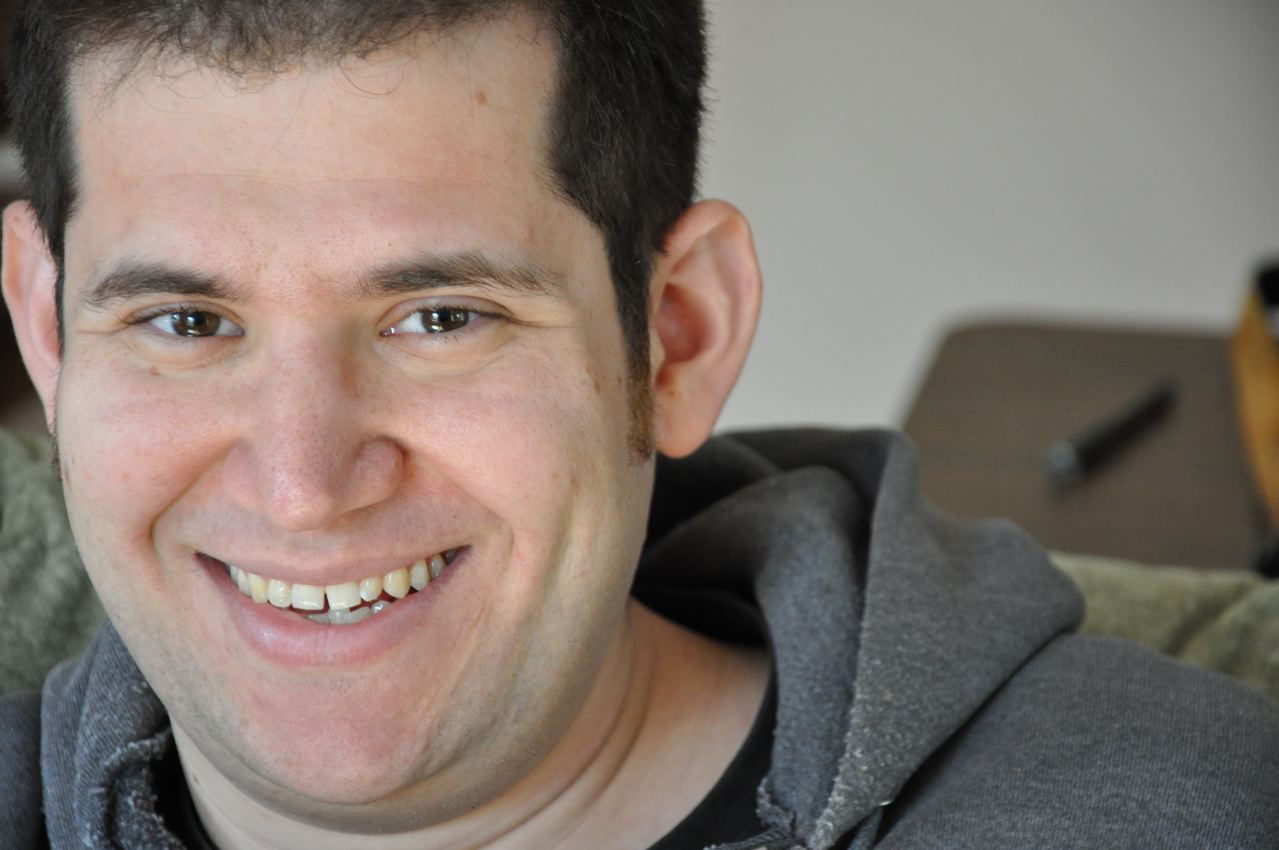
It's certainly possible, but I think the positive aspects of putting it out there outweigh the negative ones. It's not like there's anything online that truly impugns my character. Talking about struggle, making it public, means it's no longer a secret. It also suggests a readiness to deal with things directly, to come out of isolation and embarrassment and work with myself as I am, not as I wish I was. That's why I chose my friend Michelle's recent picture of me as a Facebook profile photo:
 My decision to take off my glasses makes this a slightly strange portrait, but what I focused on when I first saw it was its unsparing nature. It's easy to see my weight here: It's in my face, my cheeks, my chin. This is how I actually look, and while I'm not doing cartwheels about it, I'm trying to view this image with clear eyes and a peaceful mind. This is what I'm working with, and it's hardly perfect, but it's not a disaster, either. It's a pretty decent place to start.
It's possible that opening my heart in a piece of writing that the whole world can theoretically see isn't the wisest move. But I think there are some advantages to our tell-all Internet culture; one is that if the majority of people give TMI, it's no longer such a faux pas. I doubt anybody will decide not to hire me because they Googled my name and found me waxing philosophic about my Lexapro use or disordered eating.
It's certainly possible, but I think the positive aspects of putting it out there outweigh the negative ones. It's not like there's anything online that truly impugns my character. Talking about struggle, making it public, means it's no longer a secret. It also suggests a readiness to deal with things directly, to come out of isolation and embarrassment and work with myself as I am, not as I wish I was. That's why I chose my friend Michelle's recent picture of me as a Facebook profile photo:
 My decision to take off my glasses makes this a slightly strange portrait, but what I focused on when I first saw it was its unsparing nature. It's easy to see my weight here: It's in my face, my cheeks, my chin. This is how I actually look, and while I'm not doing cartwheels about it, I'm trying to view this image with clear eyes and a peaceful mind. This is what I'm working with, and it's hardly perfect, but it's not a disaster, either. It's a pretty decent place to start.
Sunday, January 17, 2010
BBC article on the set-point theory of body weight
We talked about this concept a bit last quarter in nutrition class. Since my own body image is reaching an undesirable low point these days, I'm trying to build a little momentum in the direction of exercising, even if that means going back to the dreaded gym. The genetic explanation is somewhat comforting:
One expert, Professor Jane Wardle, believes there could be a genetic answer, through what's known as the FTO gene. Adults who have one variant of this gene weigh on average more than everybody else.At the same time, I know that personal effort can make a big difference, at least for me. I've gone back and forth from unhealthy lows to unhealthy highs, rarely staying in the middle for very long. And even when I am in the middle, I'm generally moving fairly rapidly toward one dysfunctional pole or the other. I don't want to keep going like this. I'm starting dodgeball at the end of the month, but it's going to take more than that to get my weight under control. I also want to try to find a way to structure my eating -- to budget it -- the way I've done with money. Stay tuned...
Prof Wardle believes the gene can influence appetite, leading some people to not know when they are full. Those without the gene, she thinks, find it easier to say no to food.
Subscribe to:
Posts (Atom)